Image: pexels.com
Catholic Pilgrimage PH | by Rev. Fr. Henry Bocala | Are Emotions a Bane or a Boon? | Helen Keller said that “The best and most beautiful things in the world cannot be seen or even touched. They must be felt with the heart.”
Passions like love, joy, anger, sadness, or fear are neither good nor bad per se. We are all born with temperaments. In a way, we are not authentic if we hide our emotions; and doing so is asphyxiating. Just as true, we are being honest if we express what we truly feel, and losing our inhibitions sets us free. A person without emotion is insensitive, unfeeling, callous, and heartless. Life without emotions is simply cruel, let alone impossible.
Jesus was enraged with a holy ire at the Temple, wept over the death of Lazarus, pitied the widow of Nain, rejoiced seeing little children, was disappointed by the skepticism of his townspeople, and sweat in anguish at Gethsemane.
People send emoticons to convey their feelings. Like a shadow, passion trails us wherever we go, by way of joy or sadness, pleasure or loneliness, anxiety or serenity, depending on how we react to events. So don’t be surprised if you shed tears, get excited, scamper for safety, go bananas, flare up, or get turned on because that’s pretty natural.
Just don’t overdo it and be sure to have self-control! Since we tend to go overboard, we need to tame our raw emotions. Left unchecked, what can drive us to accomplish heroic deeds can also portend our ruin.
Highly emotional individuals are passionate, zealous, and ardent. They act fast and get things done. Because of their sensitivity, they take things to heart and empathize with others. In relationships, they’re sweet, caring, affectionate, and romantically treacly. Thanks to their social skills and bubbly personality, they have lots of friends. Invite them to a concert, party, or a river trek and they go ecstatic.
But just as fast, they feel low and depressed in a pendulum of mental state. They’re deeply affected by a bad turn of events and suffer heartaches that linger on. So too, do they tend to be nostalgic and melancholic. Changing dispositions and emotional ebb and flow are traits of men and women who live by their emotions. Fleeting sentiments drown out reason and the will is overpowered by sheer gut-feel, leading to poor judgment and imprudent decisions.
Thus, while feelings are important, life needs to be steered by a reasoning mind and a firm will, aided by God’s grace. So many past errors sprang from runaway passions. No, you don’t have to nor can you gag your emotions. But you can moderate the heart’s desires so as to avoid excesses, unhealthy attachments and channel your energies to a worthy cause. You develop self-dominion, able to direct disruptive impulses, stay calm in stressful situations, and get along with all kinds of folks.
Either we manage well our emotions and they empower us, or they dictate our behavior and get in the way. Life’s success is not all about having a high IQ, but emotional intelligence (EQ) as well, which is a set of skills that prove crucial for us to cope with challenges and succeed in life.
So, don’t be afraid to love, to feel and to emote…Just let your emotions help you grow – not ruin you – as a person. The Lord gave you a human heart for a reason: to love and be loved.
—
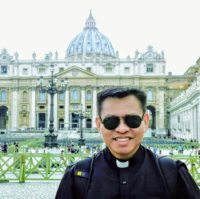
REV. FR. HENRY BOCALA, JC is a secular priest incardinated in the Prelature of Opus Dei. He is a Life Coach, Lecturer, and Author of books such as, Arise and Walk: How Does Your Christian Faith Fit in a Confused World?, Mending A Broken Society: What Happens When We Forget Who We Are?, Vital Signs: Where Is Your Life Heading?, and Your Life Begins Here: Dare To Find Your True Self and Be the Person You Are Meant to Be.
Before receiving the Sacrament of the Holy Orders, Fr. Bocala had worked as a freelance writer and an aide to a Senator in the Philippine Congress. A Political Science graduate of the University of the Philippines (UP), he entered the UP College of Law, but later shifted to ecclesiastical studies. He is also a seasoned painter and has joined several art exhibits.
Since his ordination to the priesthood, Fr. Bocala has devoted himself entirely to pastoral tasks especially among students and young professionals. His initial training as a new priest was carried out in Spain, Italy, South Africa, and Israel. He was also the Chaplain of Warrane College at the University of New South Wales in Sydney (Australia) before coming back to the Philippines in 2003.